
Digital ads are everywhere. But the smartest ones? They use data, AI, and show up at the right time. Wondering how? It’s just the best ad placement strategies.
Welcome to the era of AI-powered ad placement strategies. Whether you're just dipping your toes into PPC advertising strategies or you're a performance marketing agency juggling multiple campaigns, this guide will help you refine your ad placement strategies for the Google AI age.
Ad placement is all about where your ads appear. Be it on a search result page, inside a mobile app, in a YouTube video, or between Instagram stories.
But in the Google AI era, it’s more. You must get the right message at the right moment. How? Using machine learning magic.
Why does it matter? Advertisers can maximize reach, relevance, and ROI. Publishers can monetize content without sacrificing user experience. Smart ad placements solutions are important to keep pace with AI.
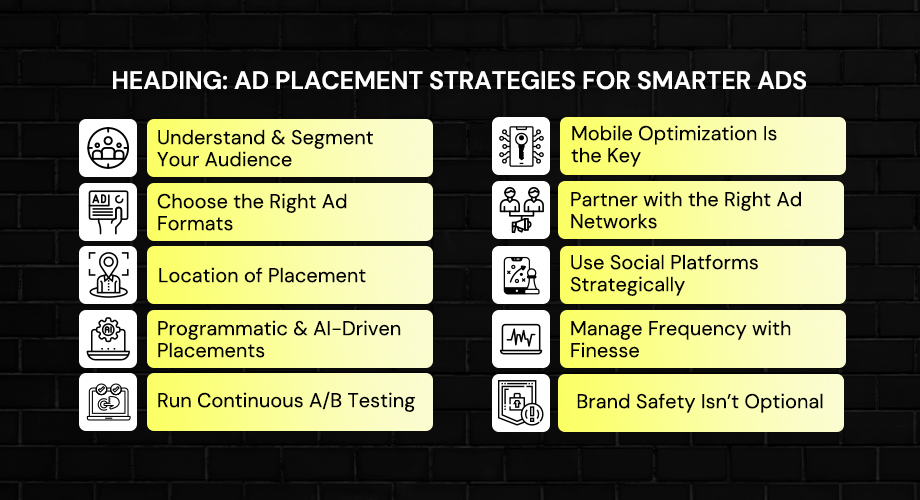
Google’s AI doesn’t just optimize your bids. It changes the game. Let’s break down how you can blend human insight with machine brilliance.
Before you launch a single ad, ask yourself: Who am I talking to? Tools like Google Analytics 4 (GA4) help you slice your audience by:
Use this insight to ensure that your ads feel less like a billboard and more like a personal recommendation. Here’s a tip for you! Use Google’s AI-powered audience suggestions to know hidden micro-segments for better PPC ad management.
Not all formats are created equal. Choose the format that fits your goal, platform, and user behavior. Popular formats include:
Mix and match. Static and dynamic. Think omnichannel.
Digital ad placement is just like real estate. Where you show up is important. You can try these placements:
Fun fact: Sticky ads can boost viewability by up to 60%, according to Snigel.
Manual buying? That’s so 2015. AI-driven placements are the future.
For any target ad agency, programmatic placement is a force multiplier.
Want results? Test everything. A/B testing isn’t just for headlines. You must experiment with images, ad formats, placement zones, and CTA buttons. Use platforms like Google Optimize or Optimizely to track CTR, CPC, and conversions. Learn what works. Adapt quickly. Repeat.
Use tools like Google Optimize or Optimizely. Track CTR, CPC, and conversion rate. Learn fast. Adjust faster.
More than 60% of internet traffic is mobile. If your ads aren’t optimized for phones, you’re leaving money on the table. Use responsive formats. Prefer mobile-friendly style- carousels, interstitials, vertical video. Leverage GPS targeting. Make your PPC advertising strategies mobile-first by default.
Your reach depends on who you partner with. Contextual advertising is back and cookie-free! You can choose Google Ads, Media.net, or Amazon Ads. Connect with networks that show your brand values. For solo advertisers or a performance marketing agency, smart partnerships pay off.
Every platform has its superpower:
Edit content for every platform. Use Google AI to sync performance across them.
Too much exposure? Ad fatigue. Too little? Lost opportunity. Use frequency capping tools. Retarget intelligently. Let AI balance how often users see your ads across devices. Remember: Smart repetition beats loud repetition.
Your ad doesn’t belong next to conspiracy theories or clickbait. Use brand safety tools like IAS, Google controls, or DoubleVerify. Apply inventory filters. Monitor new placements before scaling. Ad placements solutions must protect your brand as much as they promote it.
Ad placement is a finely-tuned science. One that has creativity, data, and AI. The impact of strategic advertising placement speaks for itself. Here’s how:
Effective ad placement strategies get your brand in front of the right person without burning your budget.
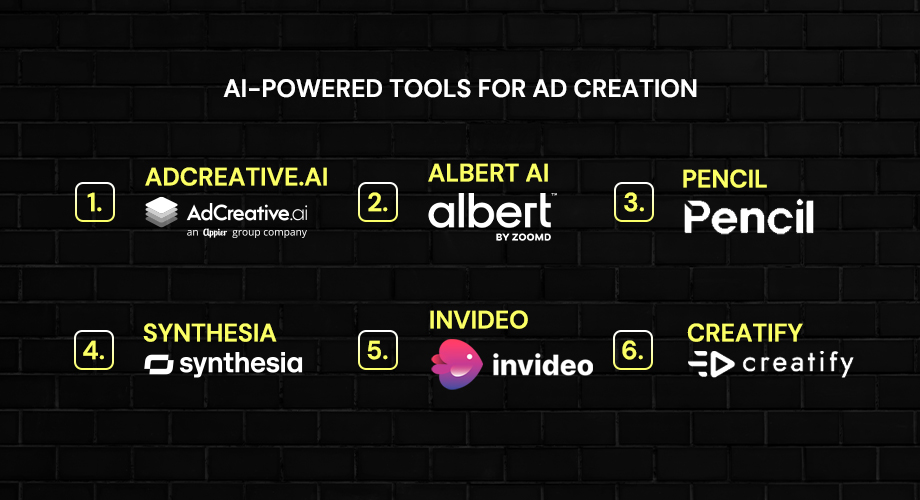
Using viral TikTok hashtags is great! But knowing which ones work better. That changes the game. Let’s look at the tools turning heads and boosting conversions.
Why write 100 variations when AI can do it for you? Generate ad designs using AdCreative.ai, Albert AI, and Pencil. AI-generated video and avatars using Synthesia, InVideo, and Creatify. Killer AI ad copy for Anyword, Jarvis.ai, Phrase. These tools make creative testing a breeze for any target ad agency.
AI uses data to get personalized ads. Machine learning with predictive analytics leads to pinpoint targeting. Auto-optimize campaigns using Google Ads Smart Bidding & Adext AI. Deliver the right message to the right person, at the right time.
AI isn’t just watching. It’s reacting. Adjust bids and budgets dynamically. Identify underperformers early. Tools like Cometly & Madgicx offer deep analytics and recommendations. Think of it as autopilot for PPC ad management.
AI doesn’t replace creativity. It fuels it. Analyze past winners to suggest new formats. Automate variations based on performance data. Use AI creative sprints to iterate fast. The result? Faster, smarter advertising placement decisions.
Even the best strategies face hurdles. Here’s how to beat them:
Ad fraud is driven by bots, fake websites, and low-quality inventory. It can drain your budget and sink ROI. The best solution is to partner with trusted publishers and use private marketplaces (PMPs). Ad verification tools help detect invalid traffic (IVT). Regular traffic source checks and data analysis detect suspicious patterns before they cause damage.
Even the most creative ad won’t work if people never see it. Poor placement, quick scrolling, and slow load times are common culprits. Placing ads in high-visibility areas like above the fold, speeding up page and ad load times, and using responsive, eye-catching formats ensure your ads appear where and when users are most likely to notice them.
With more users employing ad blockers, reaching audiences is becoming a challenge. Adblock detection scripts can help identify these users, enabling you to offer ad-light experiences or subscription models instead. Native advertising is another powerful solution, as it blends naturally with content and is harder to block. For video ads, server-side ad insertion (SSAI) embeds ads directly into streams for uninterrupted delivery.
Few things hurt a brand faster than an ad appearing next to inappropriate or harmful content. Clear brand suitability guidelines are essential, along with blocking unsafe websites or categories. Keyword blocking and contextual targeting keep ads in relevant, positive environments, while reputable programmatic partners add an extra layer of safety assurance.
Reaching the right people with the right message is more complex in the era of strict privacy regulations. The key is deeper audience understanding through analytics and segmentation. Relying on first-party data and contextual targeting helps maintain relevance without overstepping privacy lines. Meanwhile, AI and machine learning can optimize campaigns in real time, adjusting bids and creatives based on user behavior.
Overcoming ad placement challenges requires a blend of technology, strategy, and agility. By prioritizing transparency, audience relevance, and continuous optimization, advertisers can navigate today’s digital landscape and achieve stronger, more sustainable results.
The landscape is evolving fast. Here are emerging trends worth your attention:
The future of ad placement strategies is immersive, intelligent, and user-first.
If you're in marketing, now is the time to level up.
With tools like Google’s Performance Max and a solid understanding of AI-enhanced ad placement, you can reach more users, get better ROI, and build trust.
Test. Learn. Optimize. Repeat. Because in this AI-powered world, the smartest ad isn’t the loudest, it’s the one that performs. Get in touch with an expert who helps you get the best results. Connect now!
Need more clarity? Our FAQs cover everything you need to know about our process, services, and results.
Share with:


Get in touch today to see how we can help your business
achieve its full potential online.

The Scale Performance is a results-first ecommerce marketing agency helping brands scale fast with optimized campaigns and smart digital performance strategies.



Copyright © 2025 The Scale Performance. All rights reserved.